PASSAGE 1
You should spend about 20 minutes on Questions 1-13.
Margaret Preston
Australian Modernist Artist
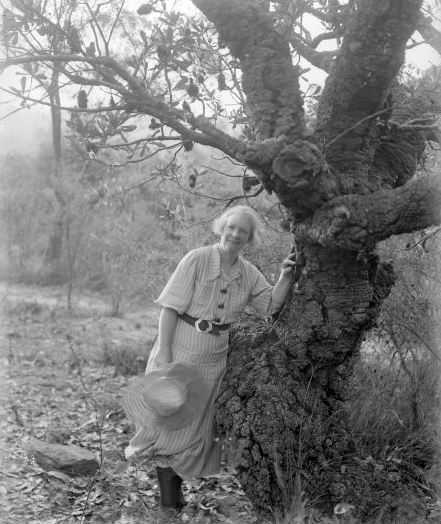
Margaret Preston (1875-1963), Australian modernist painter and printmaker
Margaret Preston's vibrant paintings and prints of Australian flowers, animals and landscapes have delighted the Australian public since the early 1920s. Margaret Preston was born Margaret Rose McPherson in Port Adelaide, South Australia in 1875, the daughter of David McPherson, a Scottish marine engineer and his wife Prudence Lyle. She and her sister were sent at first to a private school, but when family circumstances changed, her mother took the girls to Sydney where Margaret attended a public high school. She decided early in life to become an artist and took private art lessons. In 1888, she trained for several months with Sydney landscape painter William Lister, and in 1893 enrolled at the National Gallery of Victoria Art School, where she studied for just over four years.
In 1898, after her father died, Margaret returned to Adelaide to study and then teach at the Adelaide School of Design. Her early artwork was influenced by the German aesthetic tradition, in which subjects of the natural world were depicted in a true to life manner. Margaret's first visit to Europe in 1904, and her studies in Paris, France had little impact on this naturalism that dominated her work from this early period. However some eight years later, after returning to Paris, she began to recognize the decorative possibilities of art.
With the outbreak of the First World War, Margaret traveled to England, where she had exhibitions and continued her studies of art. She was a student of pottery, but at some time developed her interest in various techniques of printmaking and design. In England's West Country, she taught basket weaving at a rehabilitation unit for servicemen. It was on board a boat returning to Australia that she met wealthy businessman William Preston, whom she married in 1919. Together Margaret and William settled in the Sydney harbourside suburb of Mosman. The most characteristic prints from her early years in Sydney are views of boats floating on Sydney Harbour and of houses clustered on foreshore hills. Although Sydney was their home, the couple traveled regularly, both overseas and within Australia.
Her first major showing in Australia was with her friend Thea Proctor, in exhibitions in Melbourne and Sydney in 1925. Many of Preston's prints were hand-coloured in rich scarlet reds, blues and greens, and all of them were set in Chinese red lacquer frames. Harbour views were again prominent, but in comparison with earlier artworks, they were compact and busy, using striking contrasts of black and white combined with elaborate patterns and repetitions. Other prints from this period featured native flora. It was with these still-life subjects that she convinced the public that Australian native flowers were equal in beauty to any exotic species.
From 1932 to 1939, Preston moved away from Sydney and lived with her husband at Berowra, on the upper reaches of the Hawkesbury River. The area was rich in Aboriginal rock art sites and this had a profound influence on her work. She began incorporating Aboriginal motifs and symbols into her paintings and prints, believing that Australian art should draw on indigenous culture to develop its own unique identity. Preston wrote extensively about Aboriginal art, advocating for its recognition as a legitimate art form at a time when it was largely dismissed by the mainstream art world.
Preston's legacy includes not only her own artistic achievements but also her role in promoting a uniquely Australian artistic identity. She produced over 400 artworks during her career and her work continues to be celebrated for its bold use of color, innovative techniques, and incorporation of Australian themes. Her advocacy for Aboriginal art and her belief that Australian artists should draw inspiration from their own landscape and culture helped shape the development of modern Australian art. Margaret Preston died in 1963, leaving behind a body of work that continues to influence Australian artists today.
Questions 1-7
Do the following statements agree with the information given in Reading Passage? Write TRUE if the statement is true, FALSE if the statement is false, NOT GIVEN if the information is not given in the passage.
if the statement agrees with the information
if the statement contradicts the information
if there is no information on this
Margaret Preston was born in Sydney.
Preston studied art in Europe.
Preston was the first Australian modernist artist.
Preston believed Australian art should have its own style.
Preston's work was immediately accepted by art critics.
Aboriginal art was widely recognized in Preston's time.
Preston wrote about Aboriginal art.
Questions 8-13
Complete the notes below using NO MORE THAN TWO WORDS from the passage.
Margaret Preston's Art
Artistic Style and Influence
- •Incorporated Aboriginal8into her work
- •Used native flowers in9
- •Was influenced by Japanese10
- •Wrote11about Aboriginal art
- •Promoted Australian12identity
- •Created over13artworks