PASSAGE 1
You should spend about 20 minutes on Questions 1-14.
Agatha Christie
Queen of Crime Fiction
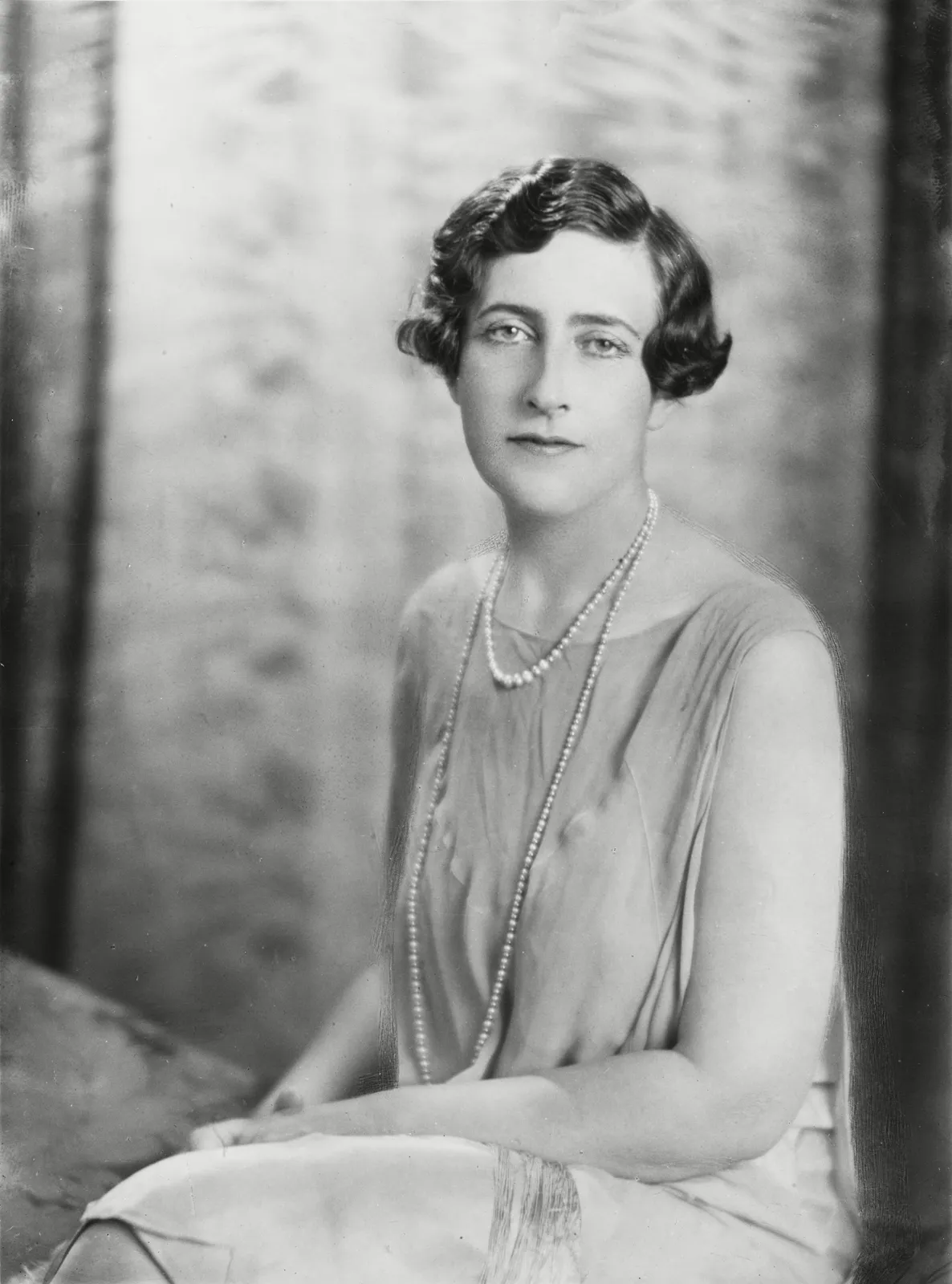
Agatha Christie (1890-1976), British crime fiction writer
Crime fiction books, in which detectives hunt for the perpetrators of crimes, have been popular with readers for many decades – so popular, in fact, that at recent London Book Fair sales of the genre overtook general fiction for the first time ever, a development that had been widely anticipated. Commercial success, of course, does not impress everyone and there are those who believe crime fiction should not be held in such high regard. Prominent in this group is Sebastian Franklin, who has argued that most crime fiction books better resemble crossword puzzles than literature. His view is shared by other literary critics. However, increasingly this is a minority opinion as crime fiction becomes recognized around the world as a rich and dynamic literary genre in its own right. Crime writing really came to prominence in the 1920s and 30s with the books of the British author Agatha Christie, and to a slightly lesser extent the American James M. Cain. Agatha Christie was a prolific writer, publishing more than 60 detective novels over a 50-year period, beginning in 1920.
However, the majority of the general public has never picked up one of her books and is more familiar with Christie from the numerous adaptations of her work for films. The colorful locations around the world where Christie set many of her stories were not fictional depictions, but were informed by her extensive travels, on the Orient Express train, to Cairo and the River Nile, and elsewhere. Her memoir, Come, Tell Me How You Live, published in 1946, is a non-fiction account of these real-life travels, so is unique among Christie's publications. Success brought Christie considerable wealth and international fame, though she never lost her appetite for work, continuing writing and publishing until shortly before her death in 1976.
Without doubt there are certain elements that tend to be repeated in Christie's books. The stories generally revolve around a well-off if not aristocratic circle of people, whose privileged lives are thrown into chaos by an unexplained crime. What's more, the location is often a confined space of some sort: a train, an island, a boat, an isolated house or a village. This is quite different, for example, to the world of the fictional detective Sherlock Holmes, who often has as his hunting ground the entire city of London. But the influence of Christie's sheltered, secluded locations has been immense, for they have been used in countless television series ever since.
The writer Michael Utley argues that Christie's characters lack depth and are not convincing people we can believe in. This is not an infrequent complaint, but it is quite untrue. Christie was a perceptive observer of human nature and psychology and she put the traits of people she knew into many of her fictional characters. Part of the reason her appeal has been so widespread is that she wrote about human relationships in a way so many of us can relate to. Her very first book, The Mysterious Affair at Styles, features the amateur detective Hercule Poirot. Poirot and Miss Marple are Christie's two best known and most frequently imitated characters precisely because they are so well drawn and believable. Further evidence of Christie's ability at characterization was provided by a recent survey. The survey asked readers to identify the villain revealed in the final pages of Christie's sixteenth book, Murder on the Orient Express. Most readers could not recall, because for them the really important aspect of the book had been the interplay between the characters, not the outcome. The truth is that Christie's characters were one of her greatest achievements as a writer.
The books are also action-packed, no less so than today's most popular thrillers. Christie mastered the art of the page-turner: events unfold so quickly and unpredictably that we keep reading to find out what happens next. The most significant consequence is that it is so simple to overlook vital clues. It is worth reading a Christie book a second time just to notice how carefully she hides crucial information about the criminal's identity. It was there all along, but we just fail to see it because she has created such tension and so many exciting distractions. Attempts to retell Christie's stories in contemporary times have largely been unsuccessful; they work best in their original early twentieth-century settings and cannot accommodate mobile phones, computers and DNA analysis. But that does not mean her influence has come to an end.
Indeed, a new generation of global crime writers is emerging in nations as diverse as Brazil, Singapore, South Korea, India and Nigeria, to name but five. And though each new writer adds something of their own, they all employ conventions first established by Christie. If we take just one of her books, The Murder of Roger Ackroyd, we find near perfect examples of conventions that are still used today: tight plotting, clever sub-plots, unexpected twists, perceptive characterization. Perhaps this is why Christie herself is believed to have ranked The Murder of Roger Ackroyd above all her other work. Certainly, the digital revolution has transformed crime fighting. But a survey of contemporary crime writing shows that Agatha Christie's legacy is more important now than at any time previously, at the very point when crime writing has become the most popular of all book genres.
Questions 1-6
Do the following statements agree with the claims of the writer in Reading Passage?
if the statement agrees with the information
if the statement contradicts the information
if there is no information on this
Sales of crime fiction were surprisingly high at a recent London Book Fair.
Literary critics such as Sebastian Franklin think that crime fiction is overrated.
Agatha Christie and James M. Cain admired each other's writing.
Most people know about Christie from films rather than books.
Christie's descriptions of international locations were based on her own experience.
Christie enjoyed the wealth and fame she achieved through writing.
Questions 7-14
Choose the correct letter, A, B, C or D.
Agatha Christie Analysis
Questions
- •Question 7: What is the writer doing in the third paragraph?7
- •Question 8: The writer refers to Michael Utley in order to8
- •Question 9: What point does the writer make about Christie's writing style in the fifth paragraph?9
- •Question 10: What does the writer conclude about Christie in the final paragraph?10
- •Question 11: Christie's book Come, Tell Me How You Live11
- •Question 12: Christie's first book, The Mysterious Affair at Styles12
- •Question 13: Christie's sixteenth book, Murder on the Orient Express13
- •Question 14: The Murder of Roger Ackroyd, published in 192614