PASSAGE 1
You should spend about 20 minutes on Questions 1-13.
William Smith
The Father of English Geology
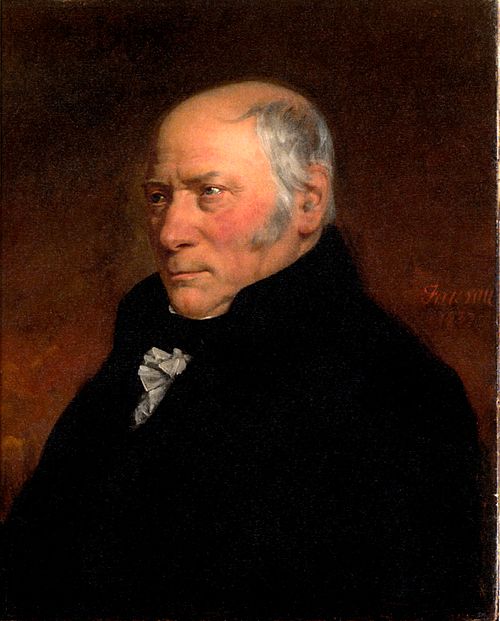
William Smith (1769-1839), English geologist and surveyor
William Smith, 1769–1839, has been called the 'Father of English Geology'. His pioneering map of 1815, depicting the geology of England, Wales and part of Scotland, helped to shape the economic and scientific development of Britain, just as the country was experiencing the Industrial Revolution.
William Smith was born in rural Oxfordshire in 1769. The son of the village blacksmith, Smith was the eldest of five children. After elementary education at the village school, where he developed a liking for geometry and drawing, he decided to teach himself the skills of surveying, possibly because there were an increasing number of openings for that profession. At the age of 18, he was employed by Edward Webb, a surveyor in a nearby town, and subsequently, in 1791, he set up in business on his own.
As a boy, Smith had developed an interest in the exposures of rock and the fossils which were to be found locally. As an adult, his surveys of land that would be suitable for building canals, and for sources of building stone and coal in other parts of England, led to a great increase in his knowledge and awareness of various geological features. As he travelled, he found the strata that he was familiar with in the south of England were repeated in other areas, with some outcrops – the rocks emerging above ground – stretching right across the country. Coal miners were already aware of the occurrences of regular successions of workable coal seams. But on a larger scale, Smith began to recognize that sedimentary rocks could be identified by the fossils they contained, and that these rocks were always arranged in the same order. Smith's discovery that beds of rocks can be distinguished by the fossils found in them was a concept virtually unrecognized by geologists of that period.
Working on this principle, Smith was able to draw up a table of successive strata which could be applied in any other locality – an early version of the geological column. By 1799, Smith was using both his skills as a surveyor and the knowledge gained from his observations in the field to draw up a geological map. This first map was circular in form, covered the area around the city of Bath, and was exhibited at the Bath Agricultural Society. At the same time, Smith continued to plan the publication of a treatise describing his discoveries, but financial support proved difficult to find. In 1801, Smith produced a small geological map of England and Wales which illustrated the outcrops of seven geological formations.
Other maps were produced for exhibition at various meetings, but it was not until 1815 that, with input from the enterprising map publisher John Cary, Smith's first major map actually appeared. It was called 'A delineation of the Strata of England and Wales with part of Scotland; exhibiting the Collieries and Mines, the Marshes and Fen Lands originally overflowed by the Sea, and the varieties of soil according to the variations in the substrata, illustrated by the most descriptive names'. It showed the outcrops of some twenty formations. Other publications on stratigraphy followed, including his major mapping publication 'Geological Atlas', comprising maps of 21 counties. Published between 1819 and 1824, these maps represent a first attempt at systematic sheet mapping of England and Wales.
Despite the importance of his ideas and publications, Smith continued to find recognition elusive and it was not until 1831, when the Geological Society awarded him the first Wollaston Medal, that the importance of his achievements was finally acknowledged. In his citation, the geologist Adam Sedgwick called Smith the 'Founder of English Geology'. From time to time, Smith's expertise continued to be drawn upon for major projects. In 1838, he was commissioned to accompany Henry De la Beche and Sir Charles Barry on a tour of the principal stone quarries to recommend the stone to be used in the rebuilding of the Houses of Parliament, which had been destroyed by fire in 1835. The practical nature of the commission provides a link between Smith's work and that of De la Beche and his newly founded Geological Survey.
The main focus of Smith's work was to apply his observations and ideas to the everyday needs of the canal builders, quarry- and mine-owners, landowners and agriculturists who were underpinning the Industrial Revolution. His understanding of geology enabled him to predict where coal or different types of stone could be found, which was very useful for mining companies. He talked at meetings about geology and its valuable contribution to the national economy.
The methods involved in map production have developed, and the ways in which people access maps have altered radically since Smith's time. However, his conviction that geological mapping is of vital importance at many levels and in many areas of the nation's society, science, and industry is as true today as it was two centuries ago, when he conceived his original geological map. It is as vital for today's industries to be provided with accurate geological map data as it was in Smith's time.
Questions 1-6
Do the following statements agree with the information given in Reading Passage?
if the statement agrees with the information
if the statement contradicts the information
if there is no information on this
William Smith created the first geological map of England.
Smith received formal university education in geology.
Smith's geological map was immediately recognized as groundbreaking.
Smith's work influenced Charles Darwin's theory of evolution.
Smith became wealthy from selling his geological maps.
The Geological Society eventually honored Smith for his contributions.
Questions 7-13
Complete the notes below using NO MORE THAN TWO WORDS from the passage.
William Smith's Life and Work
Career
- •Smith's7led to his geological insights
- •Struggled to find a8for his map
- •Traveled across English9to study rock formations
- •Eventually received10for his work
- •Used fossils found in11layers
- •His work had impact on the12
- •Demonstrated the13of geological mapping